
The Real Reason Kids Act Out at School (It's Not What You Think)
There is a conversation happening in school buildings all over the country right now. It goes something like this: behavior is getting worse, teachers are exhausted, and nobody can quite agree on why. Screen time gets blamed. The pandemic gets blamed. Parents get blamed. And every once in a while, in hushed tones, the kids themselves get blamed.
But there is a quieter explanation sitting right at the center of this problem that doesn't make nearly enough headlines: a lot of the children acting out in classrooms are also failing academically. And math, specifically, is often where that failure starts.
The Numbers Are Not Reassuring
Let's talk about what's actually happening with math achievement in American schools right now, because the data is bracing. According to the most recent Nation's Report Card, nearly a quarter of fourth graders do not reach the NAEP Basic level in math — meaning they likely cannot identify odd numbers or solve a problem using simple unit conversions (NAEP, 2025). Nearly 40 percent of eighth graders are working below the NAEP Basic level. These are not outliers. These are national averages.
And here is the part that should concern every parent of a young child: math difficulties are cumulative and worsen with time. Difficulties with whole numbers are obstacles to learning fractions, and difficulties with fractions lead to failure in algebra (Jordan et al., 2009). One longitudinal study in Delaware found that roughly 25% of students failed to meet state math standards in third grade — and the percentage of failing students increased each grade thereafter, reaching 49% by ninth grade. The gap doesn't close on its own. It widens.
This is not a high school problem wearing a high school costume. It is an elementary school problem that nobody interrupted.
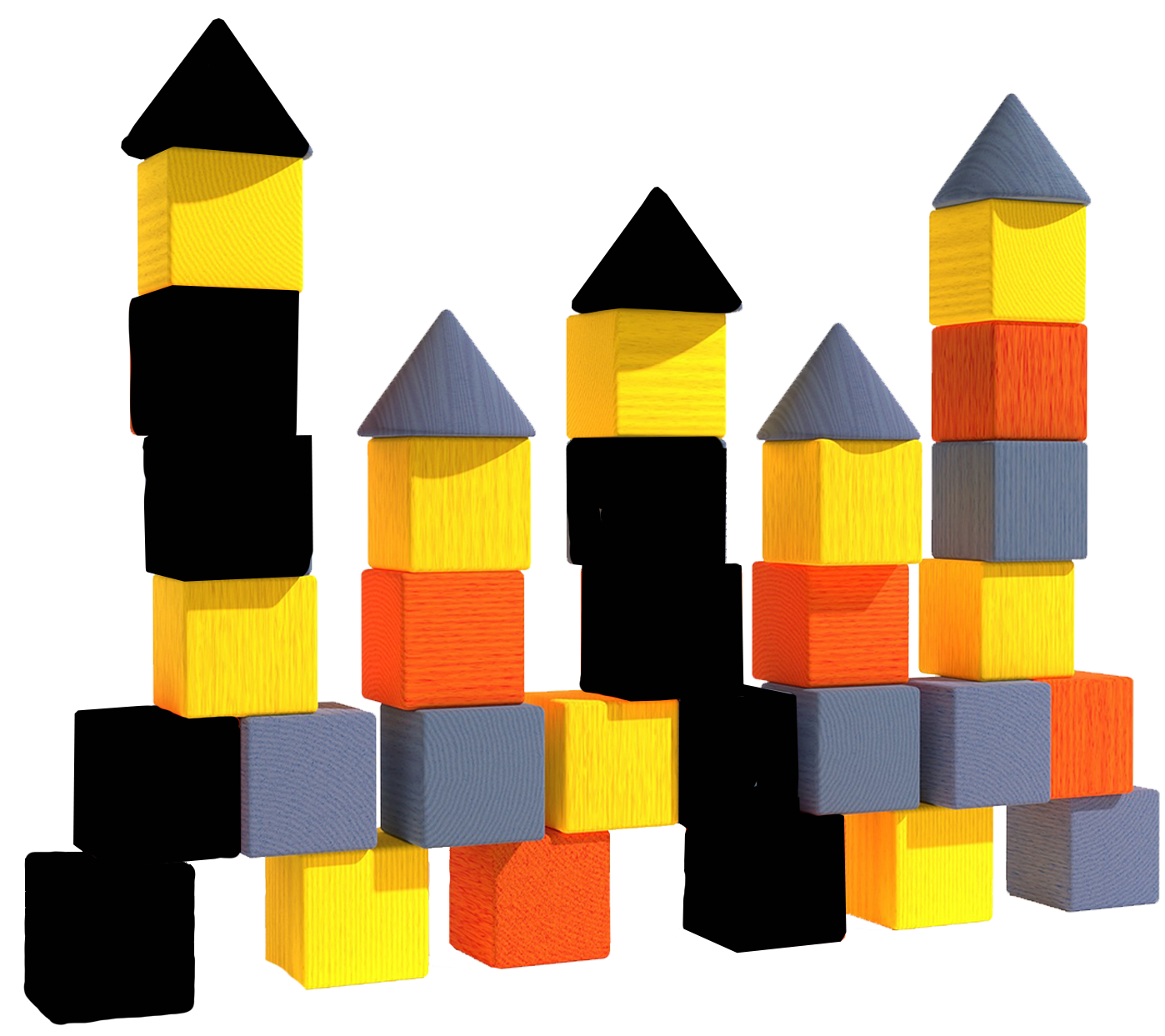
Missing foundation effects moving upward
What Happens When Math Gets Harder and the Foundation Isn't There
Math is not like other subjects in one important way: it builds on itself relentlessly. You cannot skip the foundation and figure out the framing later. Proficiency with whole numbers is required for understanding fractions, a key aspect of geometry and measurement, and challenges with fractions lead to failures in algebra. Researchers who followed fifth graders into high school found that knowledge of fractions and whole-number division uniquely predicted students' knowledge of algebra and overall mathematics achievement five or six years later even after controlling for IQ, working memory, and family income (Siegler et al., 2012).
So what happens to a child who arrives in fifth grade without solid fraction sense? Or in seventh grade without the number relationships that make proportional reasoning possible? They don't simply find it hard. They find it impossible. And they sit in classrooms every day being asked to do things they genuinely cannot do, without the tools to explain why or the language to ask for help in a way that doesn't feel humiliating.
Math anxiety and math performance have a strong negative relationship, and that relationship is even stronger when tasks involve multiple steps and complex problem solving exactly the kind of math that fills the upper elementary and middle school years (Maki et al., 2024). The more complex the math gets, the more the anxiety amplifies, and the more the anxiety amplifies, the worse the performance gets. It is a loop, and it starts much earlier than most people realize.
The Behavior Connection Nobody Is Making
Here is where the behavior research comes in, and it is worth slowing down for.
A 2023 article in Educational Leadership makes a point that sounds almost too simple once you hear it: most problem behaviors are a way children adapt to or avoid challenging environments they cannot manage effectively on their own (Weinstein & Tsai, 2023). The behavior isn't the disease. It's the symptom. And for a significant number of children, the disease is a chronic academic struggle that was never addressed.
Think about what it actually feels like to sit in a room every day where you are consistently asked to do things you cannot do. You don't raise your hand because not knowing is embarrassing. You don't ask for help because asking confirms what you already fear. So you do what any reasonable person does when trapped in an impossible situation: you find a way out. You act up, you check out, you pick a fight, you become — in the language of school reports — a behavior problem.
Darney and colleagues found that children who showed both academic and behavioral difficulties as early as first grade faced measurably worse outcomes all the way through twelfth grade. And Tremblay and colleagues (1992) followed children with early disruptive behavior and poor academic performance and found that those patterns didn't fade. They compounded. Recent cognitive assessments across a range of schools, socioeconomic backgrounds, ages, and locations showed a notable increase in the percentage of students struggling with executive functions and those executive function struggles make academic work harder, which increases frustration, which increases the likelihood of behavioral responses to that frustration.
It's a little bit like noticing your car is making a terrible noise and responding by turning up the radio.

Drowning out the academic feedback
This Was Never About Ability
What makes all of this particularly frustrating is that the research is equally clear about something else: none of this is inevitable. Early understanding of number relations and operations provides support for learning complex calculation procedures involving larger numbers as well as problem solving in varied contexts. The foundation matters enormously and it is buildable. Students with low initial math achievement grew at a rapid rate when provided with targeted intervention (Scammacca et al, 2020). The gap is not a permanent condition. It is a solvable one.
Daniel Coyle's The Talent Code (2009) makes the same case from a neuroscience angle: the brain physically changes with the right kind of practice. Myelin, the insulating material that strengthens neural pathways grows in response to targeted, mistake-aware effort. Which means the children who are struggling most in math classrooms right now are not missing a math gene. They are missing the conditions that grow mathematical skill.
There's a difference between a child who can't do math and a child who hasn't yet had the right experiences to build the foundational understanding that math requires. That difference is enormous. And it matters, because one of those children is treatable and one of them is not. The research says they are all the treatable kind.
What Intervention Actually Looks Like
The first thing it looks like is catching the gaps early, before the curriculum has moved three grade levels past them. A child who doesn't have solid number relationships by the end of second grade is going to struggle with multiplication. A child who struggles with multiplication is going to struggle with fractions. A child who struggles with fractions is going to find algebra nearly impossible — not because algebra is too hard, but because the scaffolding underneath it was never built.
The second thing it looks like is practice that actually builds understanding, not just familiarity. There is a meaningful difference between a child who has completed two hundred fraction worksheets and a child who genuinely understands what a fraction means. The Empower All Math Minds games are designed around that distinction — building the number relationships and conceptual understanding that let students make sense of increasingly complex math, rather than just practice procedures they don't yet understand.
The third thing it looks like is an environment where struggle is normal, mistakes are information, and a child's sense of competence grows alongside their skill. Because a child who believes they are capable of learning math behaves very differently in a math classroom than a child who has spent three years accumulating evidence that they cannot.
The behavior problem in schools is real. But for a lot of kids, it is a math problem first.
And math problems, it turns out, can be solved.
References
Coyle, D. (2010). The Talent Code: Greatness Isn't Born, It's Grown. Arrow Books.
Darney, D., Reinke, W. M., Herman, K. C., Stormont, M., & Ialongo, N. S. (n.d.). Children with co-occurring academic and behavior problems in first grade: Distal outcomes in twelfth grade.
Jordan, N. C., Kaplan, D., Ramineni, C., & Locuniak, M. N. (2009). Early math matters: Kindergarten number competence and later mathematics outcomes. Developmental Psychology, 45(3), 850–867.
Maki, K. E., Zaslofsky, A. F., Codding, R., & Woods, B. (2024). Math anxiety in elementary students: Examining the role of timing and task complexity. Journal of School Psychology, 106, 101316.
McEvoy, A., & Welker, R. (n.d.). Antisocial behavior, academic failure, and school climate: A critical review.
National Assessment of Educational Progress. (2024). The nation's report card. National Center for Education Statistics.
Scammacca, N., Fall, A. M., Capin, P., Roberts, G., & Swanson, E. (2020). Examining factors affecting reading and math growth and achievement gaps in grades 1–5: A cohort-sequential longitudinal approach. Journal of educational psychology, 112(4), 718.
Siegler, R. S., Duncan, G. J., Davis-Kean, P. E., Duckworth, K., Claessens, A., Engel, M., Susperreguy, M. I., & Chen, M. (2012). Early predictors of high school mathematics achievement. Psychological Science, 23(7), 691–697.
Tremblay, R. E., Masse, B., Perron, D., Leblanc, M., Schwartzman, A. E., & Ledingham, J. E. (1992). Early disruptive behavior, poor school achievement, delinquent behavior, and delinquent personality: Longitudinal analyses. Journal of Consulting and Clinical Psychology, 60(1), 64–72.
Weinstein, N., & Tsai, N. (2023). What's behind the rise in problem behavior? It could be cognitive. Educational Leadership, 81(3).